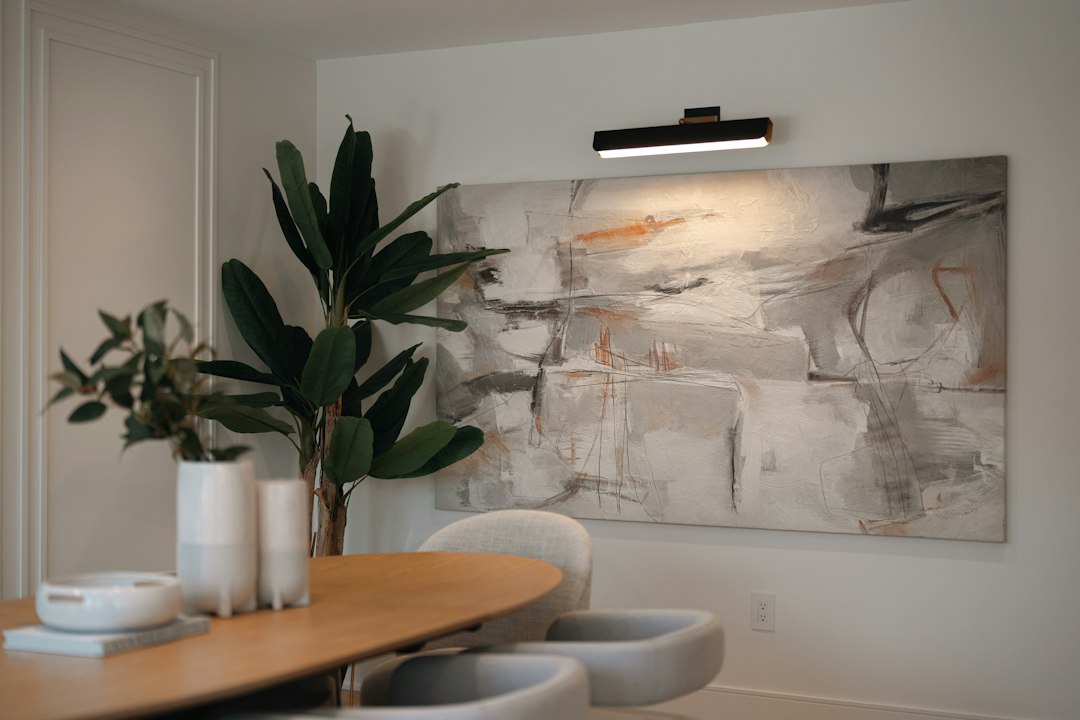
So, you’re looking to really make that gallery wall pop, and you’re wondering if an elegant faceted flush mount light can do the trick? Absolutely, it can. These fixtures are a fantastic choice because they offer a sophisticated, unobtrusive way to provide general ambient light or even highlight specific areas without competing with your artwork. They sit close to the ceiling, so they don’t visually clutter the space, and the faceted design adds a touch of visual interest and plays with light in a really beautiful way. It’s a smart solution for creating a polished and well-lit gallery wall.
Why Faceted Flush Mounts Stand Out for Gallery Walls
When it comes to lighting a gallery wall, you’ve got a few options, but faceted flush mounts often rise to the top for a few practical reasons. Unlike track lighting or wall sconces, which can sometimes feel a bit industrial or compete with the visual aesthetic of your art, a flush mount is designed to blend in while still delivering effective illumination. The “faceted” aspect is key here. It’s not just a plain dome; the geometric cuts and angles on the diffuser or shade create a subtle sparkle and a more diffused, interesting light pattern. This means you avoid harsh spotlights that can create glare on framed art, and instead get a softer, more enveloping light that enhances the overall mood of the room.
Think about it: a gallery wall is all about displaying your treasured pieces – photos, paintings, prints, or even objects. You want the focus to be on them, not on the light fixture itself. A well-chosen faceted flush mount achieves this balance perfectly. It offers enough light to properly view your collection, prevents dark shadows that can obscure details, and does so with a refined aesthetic. It’s less about being a statement fixture and more about being a supportive one, elevating everything else in the room.
Understanding the “Faceted” Design
The term “faceted” refers to surfaces that have been cut or fashioned into numerous flat faces, or facets. Think of a cut gemstone – that’s the idea. In lighting design, this typically applies to the diffuser or outer shade of the fixture. Instead of a smooth, uniform surface, you get a series of geometric planes. These facets play a crucial role in how the light is distributed and perceived.
When light hits these angled surfaces, it’s refracted and reflected in various directions. This isn’t just for show; it means the light coming from the fixture isn’t a single, harsh beam. Instead, it’s broken up and scattered, creating a more dynamic and often softer illumination. This diffusion helps reduce harsh shadows and glare, which is especially important when illuminating reflective surfaces like glass-framed artwork. The subtle sparkle and interesting visual texture that the facets add can also elevate the overall sophistication of your ceiling, even when the light isn’t on. It’s a design detail that speaks to craftsmanship and attention to detail.
Flush Mount Advantages for Art Spaces
The primary advantage of a flush mount, regardless of whether it’s faceted or not, is its low-profile nature. It sits directly against the ceiling, taking up minimal vertical space. This is a huge plus in rooms with lower ceilings, where pendants or chandeliers might feel too overpowering or even create a sense of claustrophobia. For a gallery wall, this means the viewer’s eye is drawn horizontally to the art, not vertically to an elaborate light fixture hanging down.
Another benefit is the widespread diffusion of light. While not as directional as track lighting, a good flush mount can cast a broad, even glow across a significant portion of a wall. This provides excellent ambient light that helps illuminate the entire gallery display, ensuring each piece is visible without creating stark contrasts between illuminated and shadowed areas. It’s a more democratic approach to lighting your art, ensuring everything gets its moment. Plus, flush mounts are generally easier to install and maintain than more complex lighting systems, making them a practical choice for many homeowners.
Selecting the Right Faceted Flush Mount for Your Gallery
Choosing the right light isn’t just about aesthetics; it’s about functionality, scale, and integration. For a gallery wall, you need a light that supports the art, not overshadows it. Here’s what to keep in mind.
Size and Scale Considerations
The size of your flush mount should be proportional to the size of your room and, by extension, the scale of your gallery wall. A tiny fixture in a large room with an expansive gallery wall will look lost and won’t provide adequate illumination. Conversely, an oversized fixture in a small space can feel overwhelming.
A good rule of thumb is to consider the square footage of the room. For a general guideline, you can add the length and width of the room in feet, and that sum can loosely correspond to the diameter (in inches) of your flush mount. So, a 10×12 foot room (10+12=22) might suit a fixture around 22 inches in diameter. However, for a gallery wall, you might lean towards a slightly larger fixture if it’s the primary light source for that area, or multiple smaller ones.
Also, consider the visual weight. A heavily faceted, opaque fixture will have more visual presence than a smaller, more translucent one. Think about the style of your art too. If you have delicate, minimalist pieces, a less imposing fixture might be better. For bolder, more dramatic art, you might get away with something a bit more substantial.
Material and Finish Matching
The materials and finishes of your flush mount play a significant role in how it integrates with your existing decor and the art itself. Common materials include metal (brass, bronze, chrome, matte black), glass (clear, frosted, seeded, art glass), acrylic, and sometimes even crystal for a more luxurious feel.
Consider the other metal accents in your room – door handles, furniture legs, picture frames. Do they lean warm (brass, gold) or cool (chrome, brushed nickel)? While you don’t need everything to match perfectly, a cohesive palette creates a more polished look. If your gallery frames are mostly warm wood tones, a bronze or antique brass fixture might complement them beautifully. If your frames are sleeker, like black or silver, then a matte black or brushed nickel fixture could be a better fit.
The diffuser material is also important. Clear faceted glass will create sharper light patterns, while frosted or acrylic facets will soften the light even further. If your art has a lot of texture or subtle details you want to highlight, a clear faceted glass might bring out those nuances. If you’re aiming for a softer, overall glow without specific highlighting, frosted options work well.
Light Temperature and Brightness (Kelvin and Lumens)
This is where the functional aspect really shines. The “color” of light, measured in Kelvin (K), significantly impacts the mood of a room and how art is perceived.
- Warm White (2700K-3000K): This is a soft, yellowish light, similar to traditional incandescent bulbs. It creates a cozy, inviting atmosphere and generally complements warmer-toned artwork, portraits, and landscapes. It’s often preferred in living rooms and dining areas.
- Cool White (3500K-4500K): This is a more neutral, crisp white light. It can make colors appear truer and more vibrant, which is excellent for modern art, photography, and pieces where color accuracy is important. It can feel more energetic and less intimate than warm white.
- Daylight (5000K-6500K): This mimics natural daylight and is very bright and bluish-white. While great for task lighting or spaces where absolute color accuracy is critical (like art studios), it can feel stark and unflattering in a home setting for a gallery wall.
For most gallery walls in residential settings, a warm white (2700K-3000K) or a slightly warmer cool white (around 3500K) is usually ideal. Many modern LED fixtures offer adjustable color temperature, which gives you flexibility.
Brightness, measured in lumens, determines how much light the fixture produces. For a gallery wall, you want enough light to properly illuminate your art without overwhelming it or creating glare. As a general guide, living rooms often need around 10-20 lumens per square foot for general ambient lighting. If your flush mount is the primary source of light for the gallery wall, you might lean towards the higher end or even more, but it also depends on the art itself and any supplementary lighting. Dimmer switches are highly recommended, as they allow you to adjust the brightness based on time of day, mood, or specific viewing needs.
Placement Strategies for Optimal Illumination
Where you put the light is just as important as the light itself. Good placement ensures your art looks its best and your room feels balanced.
Centered or Distributed Lighting
For a single, prominent gallery wall, a centrally placed flush mount can be very effective. If your gallery wall is relatively compact and symmetrical, one well-chosen fixture directly above the center of the wall can cast an even glow across the entire display. This creates a balanced look and ensures no single piece is overtly favored by the light.
However, if your gallery wall is very long, spans multiple walls, or is unusually shaped, a single central fixture might not be enough. In such cases, you might consider using two or more smaller faceted flush mounts distributed evenly along the length of the wall or throughout the gallery space. This provides more uniform coverage and prevents shadowy areas at the ends of a long display. The key is to ensure the spacing looks intentional and balanced, typically by dividing the total length of the wall by the number of fixtures plus one (for the ends) to get consistent intervals.
Considering Room Layout and Ceiling Height
Your room’s layout plays a big role in where to place your flush mount. Is the gallery wall the main focal point when you enter the room? If so, its lighting should command attention. If the gallery wall is in a hallway or a narrower space, the flush mount might need to be positioned to illuminate the entire pathway as well as the art.
Ceiling height is also critical. Since flush mounts sit close to the ceiling, they work wonderfully in rooms with standard or lower ceiling heights (8-9 feet). In rooms with very high ceilings, a flush mount might appear too small or its light might not reach the art effectively. In such cases, you might need a larger fixture or supplement it with other forms of lighting like track lighting or picture lights directly on the frames. For standard ceilings, the light should be positioned high enough to cast light down onto the art without creating distracting shadows from the frames themselves. Generally, positioning the light about 1-2 feet out from the wall on the ceiling, aligned with the center of the gallery grouping, is a good starting point.
Avoiding Glare and Shadows
Glare is the enemy of a well-lit gallery wall. It happens when light reflects directly off the glass or protective acrylic of your framed art, obscuring the image. Shadows can also be problematic, hiding details or creating distracting dark areas.
To minimize glare:
- Positioning: Avoid placing the light directly in front of highly reflective pieces where the angle of incidence equals the angle of reflection towards a common viewing spot. Sometimes, moving the fixture a few inches forward or backward from the wall can make a big difference.
- Light Diffusion: Faceted diffusers naturally help with glare by scattering light, but choose fixtures with good quality diffusers that don’t produce harsh hotspots.
- Dimming: A dimmer switch is your best friend. Being able to reduce the light intensity can often eliminate glare without sacrificing visibility.
- Matte Finishes: If possible, use non-glare glass for your frames, especially for pieces placed in direct line of light.
To avoid shadows:
- Even Coverage: Ensure your chosen fixture (or fixtures) provides broad, even light distribution.
- Distance from Wall: If the light is too close to the wall, it can create sharp, high-contrast shadows directly below the art. Moving it slightly further out can soften these.
- Multiple Sources: For very intricate gallery walls with varying depths (e.g., incorporating sculptures or objects), a single flush mount might need to be supplemented. However, for most framed art, a well-chosen faceted flush mount can do the job beautifully by itself.
Complementing Your Gallery Wall Aesthetic
The lighting isn’t just a utility; it’s an integral part of your design. How it looks when off is almost as important as how it looks when on.
Harmonizing with Art Styles
Your faceted flush mount should ideally complement the style of the art on your wall.
- Modern/Minimalist Art: Sleek, geometric faceted designs in matte black, chrome, or brushed nickel often pair well. Look for clean lines and understated elegance. The facets themselves add visual interest without being overly decorative.
- Traditional/Classic Art: A fixture with more ornate facets, perhaps in an antique brass or bronze finish, or one that incorporates cut glass or crystal, can enhance the sophisticated feel. Think about fixtures that have a timeless quality.
- Eclectic/Bohemian Art: You have more freedom here! A unique faceted design, perhaps with colored glass or an unusual material, could be a great fit. It’s about finding a fixture that feels unique and adds to the curated feel.
- Photography/Black & White Prints: Neutral-toned fixtures (white, black, clear glass) with a clean design often work best, as they don’t introduce competing colors or too much visual “noise.” The faceted detail can add a subtle shimmer without distracting from the monochromatic nature of the art.
The key is to ensure the light fixture doesn’t fight with the art for attention. It should enhance, not distract.
Integrating with Room Decor
Beyond the art, consider the overall decor of the room. Does your room lean industrial, farmhouse, mid-century modern, or contemporary? Your light fixture should fit within this broader aesthetic.
- Industrial: Look for faceted metal designs, perhaps with exposed hardware, in darker finishes like oil-rubbed bronze or matte black.
- Farmhouse: Simpler faceted designs, perhaps in a white or distressed metal finish, might work. The facets add a touch of refinement to the rustic feel.
- Mid-Century Modern: Geometric faceted patterns, often in brass or sometimes chrome, would be a strong choice. Look for clean, sculptural forms.
- Contemporary: Here, you have a lot of flexibility. Many faceted designs fit this category, especially those with innovative materials, interesting geometric patterns, or very clean, minimalist lines.
Consider other elements in the room: furniture styles, textile patterns, and other light fixtures. The faceted flush mount should feel like a natural extension of the existing design language, contributing to a cohesive and thoughtful interior.
Creating Mood and Ambiance
Lighting is one of the most powerful tools for setting a mood. A faceted flush mount, with its ability to diffuse light beautifully, can contribute significantly to the overall ambiance of your gallery wall space.
- Soft and Inviting: Use warm white bulbs (2700K-3000K) and a fixture with frosted or opal facets. This creates a gentle, welcoming glow that encourages lingering and appreciation of the art.
- Bright and Energetic: If your art is vibrant and modern, or if the room is a workspace, cool white bulbs (3500K-4000K) combined with clear faceted glass can provide a crisp, clear illumination that highlights colors and details.
- Dramatic and Sophisticated: Consider a fixture with darker metal finishes and a more intricate faceted design. When dimmed, this can create pools of light and shadow that add depth and a sense of drama to the room.
The subtle play of light and shadow created by the facets itself adds an extra layer of visual texture to the room. It’s not just about illuminating the art; it’s about crafting an entire sensory experience that makes your gallery wall a true focal point and a joy to behold.
Installation and Maintenance Tips
Once you’ve picked out the perfect light, getting it installed correctly and keeping it looking good is the next step.
DIY vs. Professional Installation
Most flush mount lights are relatively straightforward to install if you have basic electrical knowledge and comfort working with household wiring. If you’re replacing an existing fixture, the wiring is usually already there, making the job simpler. Key steps typically involve turning off power at the breaker, connecting wires (matching colors: black to black, white to white, ground to ground), and securing the fixture to the junction box.
However, if you’re installing a new fixture where there wasn’t one before, or if you’re uncomfortable with electrical work, hiring a professional electrician is always the safest and most recommended option. They can ensure proper wiring, correct placement, and adherence to local electrical codes, preventing potential hazards like short circuits or fire. While it’s an added cost, the peace of mind and safety are well worth it, especially when dealing with your home’s electrical system.
Bulb Choices and Efficiency
Modern faceted flush mounts are primarily designed for LED bulbs, and many come with integrated LED arrays. If yours uses standard sockets, opting for LED bulbs is a smart move for several reasons:
- Energy Efficiency: LEDs use significantly less electricity than incandescent or halogen bulbs, saving you money on your energy bill.
- Longevity: LEDs last much longer, sometimes decades, meaning less frequent bulb changes, which is a bonus for ceiling fixtures.
- Low Heat Emission: LEDs produce very little heat, which is important for art preservation, as excessive heat can damage delicate pieces over time.
- Color Temperature Control: As mentioned earlier, LEDs offer a wide range of color temperatures, allowing you to fine-tune the ambiance. Look for “dimmable” LEDs if you plan to use a dimmer switch.
Ensure the bulbs you choose match the wattage recommendations of your fixture, even if LEDs typically draw much less power. If your fixture has integrated LEDs, you won’t need to worry about bulb selection, but make sure the specifications (lumens, Kelvin) meet your needs before purchasing the fixture itself.
Cleaning and Care for Longevity
To keep your elegant faceted flush mount looking its best and performing efficiently, regular cleaning is important.
- Dusting: Dust can accumulate on the exterior and interior of the diffuser, dulling its sparkle and reducing light output. Use a soft, dry microfiber cloth or a feather duster to gently wipe down the exterior surfaces regularly (e.g., once a month).
- Deeper Cleaning: For more stubborn dirt or smudges, especially on glass or acrylic facets, you may need a slightly damp cloth. Always unplug or turn off power to the fixture at the breaker before cleaning. For glass, a gentle glass cleaner can be used, sprayed onto the cloth first, not directly onto the fixture, to avoid liquid seeping into electrical components. For acrylic, use a mild soap and water solution, as some harsh chemical cleaners can damage acrylic.
- Fixture Body: Wipe down any metal components with a dry or slightly damp cloth. Avoid abrasive cleaners or harsh chemicals that could strip finishes.
- Bulb/LED Care: If your fixture uses replaceable bulbs, make sure they are cool before handling. Integrated LEDs typically require no maintenance.
By following these simple care tips, your elegant faceted flush mount light will continue to beautifully illuminate your stunning gallery wall for years to come, truly making your art shine.